
23 Nov One Day, I’ll Miss Being 38
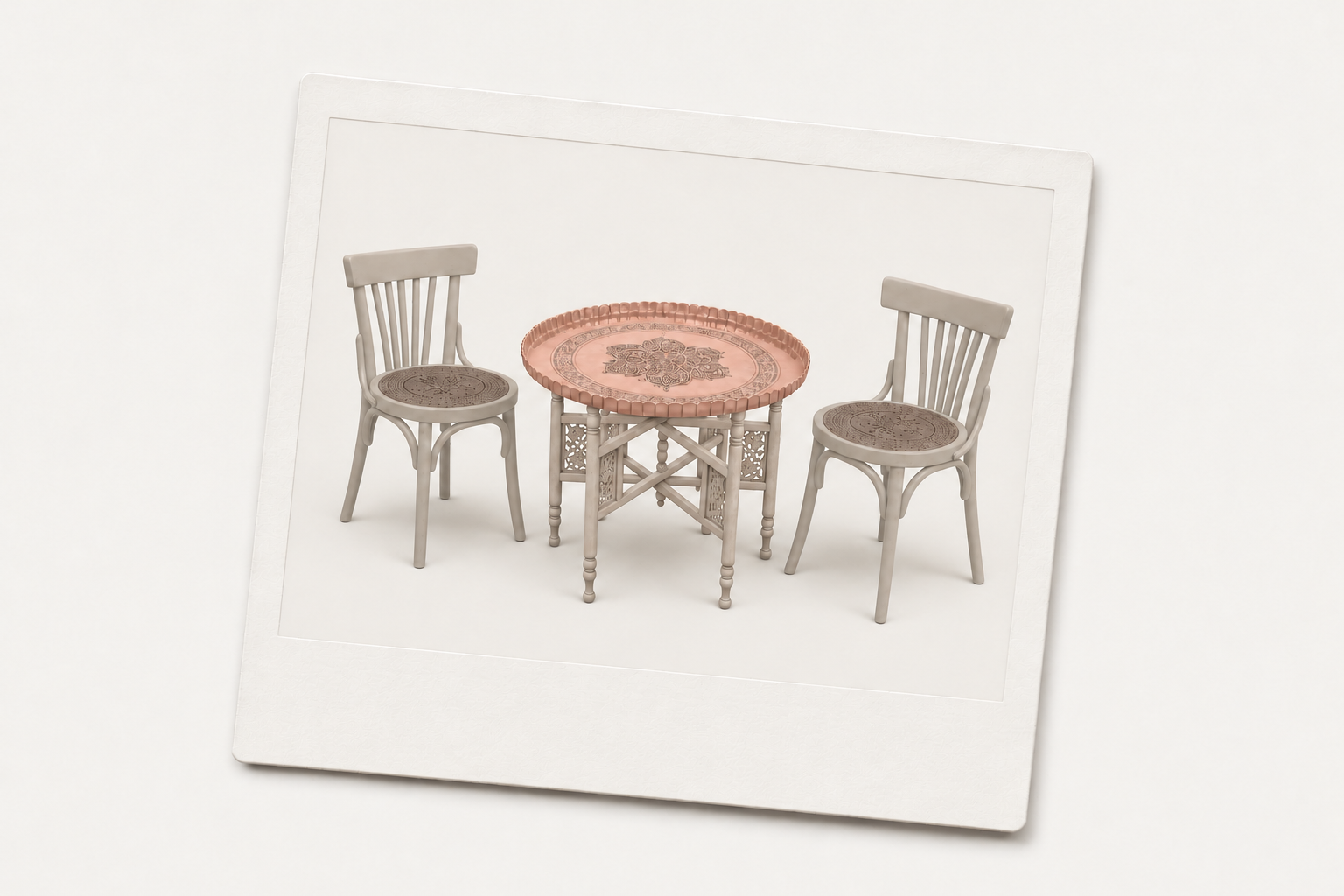
My sister was in Syria recently. None of us had been back in around fifteen years, and while she was there, she kept sending us photographs of places we used to go. One was a café my brother and I used to frequent during our university days.
I stared at it for a while, feeling an unexpected squeeze in my chest. Perhaps it was the memories that particular photograph brought back, things I hadn’t thought about in years. Or perhaps each photograph had added a little more longing until this one became too much. Suddenly, I remembered more than the place. I felt how long it had been since we sat there.
It feels like yesterday that my brother and I were university students, living in Syria away from our family, discovering the world on our own terms and generally trying to figure out what to do with ourselves. Fast forward to today, and I’m 38, increasingly conscious of aging and wishing I could somehow persuade time to slow down a little.
The irony is that back then, I couldn’t wait for those years to pass.
I wanted to graduate, find a job, establish myself, and get on with life. University was wonderful in many ways, but it was also a period I was eager to finish. I suppose I thought the really interesting part of adulthood would begin once I’d got all those preliminary arrangements out of the way.
And now, almost two decades later, I’d give quite a lot to experience some of those supposedly preliminary years again.
It’s a strange arrangement we have with time. When we’re young, we seem to have an enormous amount of it and an equally enormous desire to get through it. Then we grow older and begin wishing we had been a little less enthusiastic about the whole business of moving forward.
Although, to be fair, I don’t think I had a miserable youth. Quite the opposite, actually. I have plenty of wonderful memories, and I was adventurous, sometimes reckless, and certainly capable of having a good time. I’m not suggesting that I spent my twenties sitting in a corner worrying about my future while everybody else was out enjoying themselves.
But looking back, I do wonder how much of my time and emotional energy I devoted to things that didn’t deserve quite so much of either.
I worried about graduation, finding work, building a career, and what might happen if things didn’t go according to plan. There was always something requiring my attention, some responsibility I felt obliged to carry, or some hypothetical problem rattling around in my head.
And the funny thing is that most of those worries have long since lost their urgency. Some problems resolved themselves, others required considerably less attention than I gave them, and a few things I worried about probably never happened at all.
Yet I can remember the worrying remarkably well.
I wonder what I might have done with all that energy if I hadn’t spent so much of it anticipating difficulties. Perhaps I would have laughed more, gone out more, or allowed myself to enjoy certain experiences without feeling that I should have been doing something more productive.
Although sometimes I wonder whether I’m being fair to the person I was then, expecting him to have understood things I’ve only come to understand in the years since.
Today, I know how those situations turned out. I know which problems eventually disappeared and which decisions mattered less than I once imagined. I’ve had years to acquire that knowledge, and now I’m using it to question why a younger version of myself didn’t behave as though he already possessed it.
But he couldn’t have known.
When I was a university student, graduation wasn’t some distant memory I could look back on with amusement. It was a genuine concern. Finding employment wasn’t an issue that had already been resolved. It was something I still had to figure out, with all the uncertainty that comes with it.
Perhaps some of my worries were excessive, but others were perfectly reasonable given what I knew at the time. It’s easy to look at an old problem and wonder why you took it so seriously once you’re no longer the person who has to deal with it.
Nostalgia, of course, has a peculiar way of editing our memories. We remember the friendships, the laughter, the afternoons that seemed to go on forever. We don’t necessarily remember the full weight of the anxieties that accompanied them. A difficult period can become a wonderful memory once enough time has passed.
So perhaps my younger self deserves a little more understanding than I’ve been giving him.
Still, I can’t entirely dismiss the feeling that I was unnecessarily serious about life.
I’ve always believed that God created each of us for a purpose and that our existence carries responsibilities we ought to take seriously. I still believe that. I don’t think life is something to approach carelessly, without consideration for our obligations or the people who depend on us.
But somewhere along the way, I may have confused taking life seriously with taking absolutely everything seriously. I behaved as though being responsible required me to worry constantly, as though I could demonstrate my commitment to the future simply by spending enough time being concerned about it.
And when you think about it, worry is an extraordinarily unproductive activity for something that demands so much of our attention. It can make us feel as though we’re dealing with a problem when, in reality, we’re often just rehearsing it.
Of course, some worries lead to necessary action. But I suspect many of mine simply occupied space that could have been given to something more enjoyable.
Perhaps I could have pursued the same goals, fulfilled the same responsibilities, and worked just as hard without allowing those concerns to dominate so much of my experience.
That possibility bothers me more than the passing of time itself.
Because the more I think about those university years, the more I begin to recognize the same habit in my life today.
I’m 38, and my mind still whirs with plans. There are professional ambitions I haven’t fulfilled, experiences I want to have, and aspects of my life I’m still working to improve. In other words, I’m not quite where I want to be.
And once again, I find myself looking forward to a future version of my life in which certain things will finally have fallen into place.
Perhaps then I’ll feel more relaxed. Perhaps then I’ll have fewer reasons to worry. Perhaps then I’ll be able to enjoy myself without thinking about what still needs to be done.
But wasn’t that precisely what I was telling myself at university?
Back then, it was graduation. Today, the circumstances are different, but the underlying expectation seems remarkably familiar: there will come a point when I have accomplished enough, resolved enough problems, and become sufficiently established to enjoy life properly.
The trouble is that I have no evidence such a point actually exists.
Even when something works out, life rarely leaves the space empty for long. A new responsibility takes its place, or an ambition that once seemed distant suddenly becomes the next thing to pursue. And sometimes, having achieved what we wanted, we discover that we have developed an entirely new idea of what it means to be where we want to be.
I’m not suggesting that ambition is the problem. I enjoy working towards things, learning, and imagining possibilities for my future. I wouldn’t want to give that up, and I don’t think I should have to.
What I’m questioning is why I’ve so often treated enjoyment as an afterthought to achievement, rather than something that can exist alongside it.
Why should I need to finish everything before I can have a good time? And what would finishing everything even look like?
Perhaps that’s why the photograph affected me so much. It reminded me of a period I now remember fondly, even though the person living through it was probably preoccupied with getting somewhere else.
I wonder whether the same thing is happening now.
What if, ten years from today, I look back at being 38 with the same affection I currently feel for my university years? What if I find myself wishing I could return to this particular period, with its unfinished plans, its ordinary routines, and the experiences I’m currently too preoccupied to appreciate?
Wouldn’t it be rather absurd to spend another decade wishing for the future, only to get there and start missing the years I was so eager to get through?
I don’t know whether I could have enjoyed my youth more. Perhaps I could have. Perhaps I’m simply remembering it through the considerably more forgiving perspective that comes with age. And perhaps my younger self did the best he could with what he knew.
I can’t settle that argument now, and I don’t particularly need to.
What I can do is pay attention to the way I’m living today.
I still want to work hard, pursue my ambitions, and take my responsibilities seriously. But I’d like to laugh more, have more fun, and give the things I enjoy a little more of the attention I’ve historically reserved for things that worry me.
I’m sure I’ll still have moments when I become unnecessarily concerned about the future. At this point, I have quite a lot of practice.
But I’d rather not keep postponing the enjoyable parts of my life until all the difficult parts have been taken care of.
After all, I’m already living through a period that one day I may desperately wish I could have back.
And this time, I’d like to appreciate it while it’s happening.
No Comments